




Table of Contents
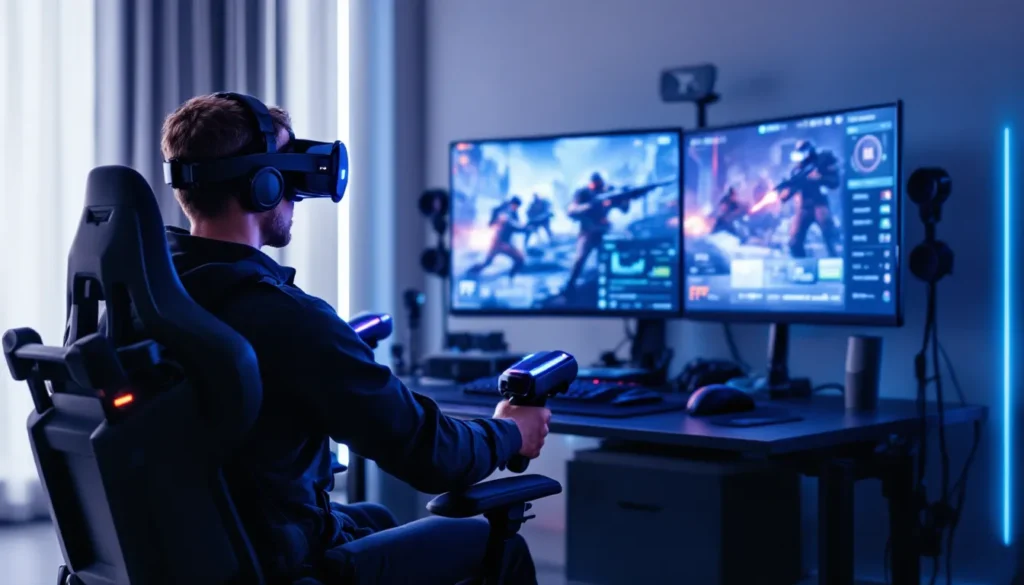
ToggleCall of Duty VR isn’t just another spin-off, it’s a complete reimagining of how you experience tactical first-person combat. Stepping into a headset and finding yourself in the middle of a warzone, where your hands control the weapons and your head movement scans for threats, changes everything. VR fundamentally alters TTK (time-to-kill) perception, recoil management, and spatial awareness compared to traditional screen-based play. Whether you’re a hardcore competitive player or someone curious about where FPS games are headed, Call of Duty VR demands serious attention. This guide covers everything you need to know about platforms, gameplay mechanics, optimization tips, and what’s coming next.
Key Takeaways
- Call of Duty VR fundamentally reimagines first-person combat by replacing screen-based controls with actual hand coordination and head-tracking, creating a physics-driven experience where recoil management and spatial awareness operate differently than traditional gameplay.
- Meta Quest 3 and Quest Pro are the primary platforms for Call of Duty VR, requiring 80GB+ storage, Wi-Fi 6+, and a 2m x 2m minimum play area, while Quest 2 support was phased out and PC versions demand high-end hardware like RTX 4080 for stable 90+ FPS performance.
- VR gameplay mechanics prioritize burst-fire rifles, tight recoil control, and physical positioning over traditional mouse flick accuracy, with smaller engagement distances where SMGs dominate under 10 meters and pre-aiming becomes more critical than reflexive snap-turns.
- Call of Duty VR ships with a 5-6 hour campaign, 8+ multiplayer maps supporting 4v4 to 6v6 matches, and a four-player co-op Zombies mode, with Search and Destroy serving as the tournament-standard competitive format.
- Cross-platform play is limited to Quest-to-Quest and PC-to-PC cross-play, while competitive ranked modes remain platform-specific to ensure hardware parity, and the grassroots esports scene is rapidly expanding with prize pools and sponsorships beginning to grow.
- Incoming Season 2 updates in April 2026 will introduce four new maps, weapon balance changes targeting LMG nerfs and SMG buffs, and a new PvE-focused Extraction mode, with PSVR2 support under active review and Meta Quest 4 optimization expected by Q4 2026.
What Is Call Of Duty VR and Why It Matters
Call of Duty VR is a standalone VR experience developed to bring the franchise’s fast-paced gunplay and tactical depth into virtual reality. Unlike traditional Call of Duty titles, VR versions eliminate the disconnect between player input and avatar movement, you’re not watching a character onscreen, you’re living the experience. Your head becomes the camera. Your hands become your weapons.
This matters for several reasons. First, aiming and recoil control operate on a completely different physics engine. You can’t just muscle-memory spray weapons across the screen: VR demands actual hand coordination and spatial reasoning. Second, immersion changes decision-making. When you’re physically raising a rifle to your shoulder, peeking around cover feels riskier than clicking a mouse. Third, the market signal is enormous, VR adoption is climbing, and major franchises recognizing this space legitimizes it as the next evolution of competitive gaming.
As of 2026, Call of Duty VR represents one of the most developed military shooter experiences in headsets, with multiple deployment options across different platforms and a growing competitive scene. Whether VR becomes the primary way people play Call of Duty or remains a specialized niche is still being written, but the tech is here and it’s mature enough to compete for serious playtime.
Supported VR Platforms and Hardware Requirements
Call of Duty VR isn’t available on every headset equally. Platform support determines whether you can even access the game, so knowing your hardware compatibility is step one.
Meta Quest Compatibility
Meta Quest 3 and Meta Quest Pro remain the primary platform for accessible Call of Duty VR. Quest’s all-in-one architecture means no PC tethering required, the game runs natively on the device. The Quest 3 handles the gameplay at solid frame rates, though demanding multiplayer lobbies can stress the chipset during peak firefights.
Meta Quest 2 support was phased out after 2024 patches: the older hardware simply couldn’t maintain the 72+ FPS needed for responsive gunplay. If you’re running Quest 2, you’re effectively locked out of current versions.
For Quest headsets, minimum specs are straightforward:
- Meta Quest 3 or Pro (mandatory)
- Storage: 80GB+ free space
- Wi-Fi 6 or better for online multiplayer (Wi-Fi 5 causes latency issues)
- Guardian space: At least 2m x 2m play area (4m x 4m recommended for full movement comfort)
Battery endurance on Quest varies, expect 2-2.5 hours of continuous gameplay before needing a charge. Long competitive sessions demand a powered headset or charging cable during breaks.
PlayStation VR and PC VR Options
PlayStation VR (original PSVR1) received a limited version of Call of Duty VR, but it’s deprecated as of late 2025. The PSVR2 situation is more interesting: while official support hasn’t been confirmed at launch, developer statements suggest a port is “in active discussion.” Given that PSVR2 ships with Call of Duty for PS5 integration in some titles, a VR version following suit wouldn’t surprise anyone watching the ecosystem.
PC VR through Valve Index, HTC Vive, or Windows Mixed Reality sees Call of Duty VR available, but adoption is fractured. You’ll need:
- Nvidia RTX 3070 or AMD RX 6800 XT minimum (RTX 4080 recommended for stable 144Hz)
- 32GB RAM (16GB creates stuttering in large multiplayer matches)
- Displayport 1.4 or USB-C with DP alt-mode
- Dedicated 2.4GHz Wi-Fi or ethernet (crucial, wireless introduces latency spikes)
- High-end cooling: VR gaming stresses CPUs/GPUs harder than traditional gaming: thermal throttling kills performance
PC versions require continuous headset calibration and driver updates. Rolling back wrong GPU drivers has killed entire online sessions for players mid-match, so version control matters.
Gameplay Mechanics and Core Features
Call of Duty VR’s mechanics feel familiar to franchise veterans but operate under VR-specific rules. Understanding these differences separates frustration from mastery.
Control Schemes and Movement Systems
Movement in Call of Duty VR uses locomotion, not teleportation. That means you’re physically moving through spaces using thumb stick or arm-based locomotion depending on your control preset. The game offers two primary schemes:
Smooth Locomotion (standard for Quest): Analog stick controls forward/backward, strafe is left/right. Head rotation controls view. This mimics traditional FPS controls but wrapped in 3D space. Most players prefer this after an hour of acclimation.
Arm-Based Movement (optional, motion-controlled): You physically swing your arms to “run.” Immersive but exhausting after 30 minutes and not recommended for competitive play. Casual players use this for novelty: everyone else disables it.
Strafing speed feels slower than traditional Call of Duty because your brain registers it differently. What feels like walking pace on a monitor reads as sprinting in VR. This changes peek timing and engagement distances significantly.
Crouching and going prone work exactly as expected, you physically lean or bend. Many players report that physical positioning actually improves tactical awareness: you can’t help but angle your body toward threats instinctively.
Weapon Handling and Combat Mechanics
This is where VR makes Call of Duty feel revolutionary. Guns have weight and recoil that you manage with actual hand control.
Aiming and Sights: You raise the controller to your shoulder (iron sights or optics) and ADS (aim down sights) by clicking. The weapon’s position in 3D space now matters, if you’re peeking left from cover, you physically move the gun left. No crosshair telling you exactly where to aim: your eyes guide the shot.
Recoil is vertical and horizontal, and it fights back. An M4 in full-auto has significant climb requiring active downward hand pressure to control. The AK-74 has sideways kick. This creates a learning curve, but experienced shooters adapt within 5-10 hours. The DPS of weapons feels more accurate to their real-world counterparts in VR, slower-firing, high-damage guns (DMRs, bolt-actions) are genuinely threatening because landing shots requires precision.
Grenade Throwing: You physically mime throwing. Pull the pin (button press), hold the grenade, and release to throw. Arc and distance depend on actual arm motion. This takes practice: new players often underthrow or overthrow explosives drastically. Veteran players develop consistent flick-throws.
Magazine Management: Reloading requires physical motion. You eject the magazine, reach to your virtual pouch, grab a new mag, and insert it. This animation locks you in place, so reloading behind cover is mandatory. Running and gunning without cover when low on ammo is actually dangerous.
Campaign, Multiplayer, and Zombie Modes
Call of Duty VR ships with three main content pillar as of 2026:
Campaign is a 5-6 hour single-player story focusing on tactical infiltration missions rather than explosive set pieces. The pacing is methodical: you’re rewarded for stealth and patience. Levels emphasize verticality, climbing, rappelling, and using elevation as advantage are core mechanics.
Multiplayer supports up to 12-player matches (4v4 base, 6v6 in larger maps). Game modes include Team Deathmatch, Search and Destroy (the competitive standout), Control Points, and a VR-specific “Breach and Clear” mode where teams assault fortified positions. Matches run 8-12 minutes depending on mode. The 12-player cap exists because more players would overwhelm the networking layer and motion tracking system simultaneously.
Zombies Mode is a wave-based survival co-op experience supporting 1-4 players. Rounds escalate in difficulty, and weapon crafting unlocks progressively. It’s the most accessible mode for new VR players because the slower zombie movement doesn’t punish latency as harshly as PvP. Most players cite Zombies as their onboarding to VR gunplay.
Essential Tips for Dominating in Call Of Duty VR
Raw gameplay knowledge means nothing without execution discipline. These tips separate competent players from dominant ones.
Optimizing Your Controller Setup
Your controller configuration determines how fast you can react. Default settings ship with conservative sensitivity and dead zones that slow down aiming.
Sensitivity Tuning: Call of Duty VR separates sensitivity into multiple axes:
- Horizontal Aim Sensitivity: Controls rotation speed when aiming down sights. Competitive players set this 60-75% (high enough for quick target acquisition, not so high you overshoot)
- Vertical Aim Sensitivity: Often set 5-10% lower than horizontal to control recoil climb naturally
- Free Look Sensitivity: Head rotation when not aiming. Most players set this high (85%+) because head movement is already physical
Dead zones must be eliminated or minimized. Even a 5% dead zone creates input lag that costs gunfights at close range. Set analog stick dead zones to 1-3% (the absolute minimum your controllers support without drift).
Button Mapping: Reload should be thumb-accessible, not requiring hand repositioning. Grenade and melee buttons need quick access without accidental activation. Many competitive players rebind ADS to a shoulder button instead of click, reducing hand fatigue during long sessions.
Haptic Feedback Configuration: Enable vibration for recoil and impact feedback, it’s not just immersive, it’s functional. Feedback tells you recoil direction and weapon impact without looking. Disable haptics on movement controls only: it creates motion sickness in susceptible players.
Mastering Aiming, Recoil, and Accuracy
VR gunplay fundamentally differs from monitor-based aiming. Mouse muscle memory doesn’t transfer directly.
Pre-aiming and Hardpoint Recognition: Identify where enemies likely peek before engagements. Pre-aim at head height before you see threats. In Search and Destroy, this wins rounds. VR’s physical nature means you can’t flick as aggressively as with a mouse, so predictive positioning is your advantage.
Recoil Compensation Stance: Most effective recoil control comes from body position, not just hands. Rotate your shoulders toward targets, brace your rear shoulder against your body. This mimics real shooting posture and actually reduces hand fatigue by distributing control load across upper body muscles.
Short, Controlled Bursts: Full-auto spraying is punishment in VR. Most weapons require 2-4 round bursts to maintain accuracy. The meta favors burst-fire rifles (M16, FAMAS) over pure SMGs for this reason. Tap-firing at range is faster TTK than holding trigger down.
Crosshair Discipline: Without a centered crosshair, your eyes become the reference point. Train yourself to look “through” the gun sight rather than at it. This takes 20-30 hours of grinding but dramatically improves response times once internalized.
Strategic Positioning and Map Awareness
Maps in Call of Duty VR are smaller than traditional multiplayer but use vertical space aggressively. High ground is even more valuable in VR because elevation changes create sight-line advantages while limiting opponent movement options.
Cover Utilization: Physical cover usage shifts. You can physically peek around objects by moving your body rather than just moving a mouse. A skilled VR player leans around walls, exposing minimal profile while maintaining clear sight lines. This 3D awareness is your edge.
Sound Cuing: VR audio is directional and positional. Footsteps tell you enemy location, distance, and movement direction more precisely than flat stereo can. Invest in quality headphones: expensive doesn’t mean better, accurate positional audio (Dolby Atmos or spatial audio) matters more than brand names. Most pros use gaming settings referenced by professional players to dial in optimal audio and sensitivity configurations.
Spawn Point Knowledge: Understanding where teammates and enemies spawn prevents feeding intelligence. In Search and Destroy, controlling the map around likely Call of Duty Spawn points wins games. VR’s physical movement speed means you can’t rotate fast, so predictive positioning is critical.
Engagement Distance Selection: SMGs dominate 0-8 meters, ARs win 8-20 meters, LMGs control 20+ meters. Play to your weapon loadout’s effective range. VR makes these distances feel more significant because movement feels slower, don’t try to SMG duel someone with an LMG at 25 meters.
Performance Optimization and Technical Setup
Call of Duty VR is demanding. Your rig needs optimization beyond standard Call of Duty PC builds to maintain 90+ FPS while keeping latency minimal.
GPU and Processing Requirements
GPU demands are relentless because you’re rendering two high-resolution displays (one per eye) simultaneously at high refresh rates. A single-monitor setup at 1440p running 120 FPS looks trivial compared to dual 2K displays per eye at 90 FPS with reprojection disabled.
Nvidia 4080 and above: Handles Epic settings with stable 90+ FPS in all multiplayer scenarios. This is the de facto minimum for competitive play without compromises.
Nvidia 4070 Ti / AMD RX 7900 XT: Runs High settings cleanly, occasional frame dips in 12-player matches during heavy effects (explosions, smoke). Not recommended for esports-level competitive play.
Below RTX 4070: You’re cutting settings significantly (Medium/Low), accepting 45-60 FPS through frame interpolation, or playing single-player content only. Multiplayer becomes unreliable.
CPU also matters heavily. Multiplayer server tick rate is 60Hz on console/Quest, but PC servers run 128Hz tick. This means your CPU has to process network input 128 times per second while maintaining physics simulation and rendering. Bottlenecked CPUs (older Ryzen 5, i5) cause frame hitches synchronized with netcode updates.
Recommended CPU: Ryzen 7 5800X3D or Intel i7-13700K minimum. Budget systems using Ryzen 5 or i5 will struggle.
RAM: 32GB is non-negotiable. 16GB forces Windows to page to storage during peak moments, creating micro-stutters that kill shot registration. Yes, it’s expensive: yes, it matters for latency-sensitive gameplay.
SSD Speed: NVMe drives (Gen4+) reduce load times and prevent storage I/O from interrupting frame rendering. SATA SSDs create occasional frame stuttering during round transitions when assets load.
Reducing Motion Sickness and Comfort Settings
Motion sickness in VR is real and affects 15-20% of new players severely. Some adapt within hours: others never acclimate. Technical setup minimizes this.
Frame Rate Stability: Frame drops cause simulator sickness faster than almost anything else. If your system can’t maintain 90 FPS consistently, lower settings further. A stable 72 FPS feels better than 90 FPS with drops to 60. Enable VSync and frame limiting to prevent fluctuation.
Motion Smoothing Disabled: Some headsets offer “frame interpolation” or “motion smoothing” to fake higher frame rates. Disable it completely. The artificially interpolated frames create motion artifacts that actively induce sickness. Stable, lower frame rates beat smoothed higher ones.
Cockpit Void / Comfort Options: Most VR settings include visual comfort modes like:
- Tunnel Vision Mode: Darkens peripheral vision during movement, reducing vestibular conflict. New players should enable this.
- Comfort Rotation: Snap-turns instead of smooth rotation for players with sensitivity to rotational motion.
- Teleport Movement: Replace continuous locomotion with point-and-teleport. This eliminates sickness but destroys competitive viability.
Play Sessions: Limit initial sessions to 20-30 minutes. Gradually increase duration as your body adapts (usually 10-15 hours of play). Pushing through discomfort doesn’t build tolerance: it conditions your brain to associate VR with nausea.
Environment Temperature: Overheating triggers nausea. Keep your play area cool. Sweating inside a headset accelerates motion sickness onset. Wear moisture-wicking clothing and maintain room temperature at 65-70°F if possible.
Available Content: Campaigns, Maps, and Weapons
Content volume directly impacts replay value and longevity. Call of Duty VR’s library is focused but substantial.
Story Campaigns and Campaign Length
The single-player campaign runs approximately 5-6 hours for a first playthrough at Normal difficulty. Harder difficulties extend this to 7-8 hours due to increased enemy density and reduced health resources.
Story structure focuses on a small-scale extraction operation across three regions: urban environment, desert facility, and arctic base. Plot is minimal, enough to justify mission objectives without pretending to be a narrative experience. Think “linear taste of what multiplayer will teach you” rather than deep storytelling.
Campaign excels at teaching gunplay fundamentals. Each mission introduces a new mechanic: silent takedowns in mission one, breaching and clearing in mission two, suppressive fire and covering fire in mission three. Completing campaign on at least Normal difficulty is strongly recommended before jumping into multiplayer. Players who skip straight to PvP struggle with recoil management and awareness.
Difficulty scaling affects enemy aggression, aim accuracy, and health pools. Legendary difficulty is genuinely punishing, enemies land headshots, flank intelligently, and require precise recoil control to eliminate. Most players find Hard difficulty appropriate for skill development.
Multiplayer Maps and Game Modes
Multiplayer shipping with 8 launch maps, including 3 additional maps added as free post-launch content through early 2026. Map design emphasizes verticality and tight sightlines to emphasize VR gunplay over raw reflexes.
Map Rotation (as of March 2026 patch):
- Downtown: Urban environment, 4v4 size, tight corners, apartment buildings. Favors SMGs and aggressive play.
- Airfield: Large outdoor space, 6v6, long sightlines. LMG and sniper-focused gameplay.
- Facility: Tight indoor compound, 4v4, narrow hallways. CQC dominance, grenades essential.
- Shipyard: Container stacks provide cover, 6v6, mid-range duels. AR-dominated meta.
- Palace: Open courtyard with multi-floor structure, 6v6, high-skill ceiling due to sight-line complexity.
- Lab: Sci-fi interior, 4v4, industrial design. Balanced loadouts rewarded.
- Harbor (added Jan 2026): Medium-sized, 5v5, offers both CQC and mid-range. Currently meta for tournament play.
- Canyon (added Feb 2026): Outdoor rocky terrain, 6v6, sniper-focused. Least popular due to slow pacing.
Game Modes:
- Team Deathmatch: First to 75 kills wins. 12-minute hard limit. Fastest mode for warm-ups.
- Search and Destroy: 4v4, best-of-11 rounds, 2-3 minute round timer. Tournament standard. Tactical, round-based.
- Control Points: Capture and hold three flags. 10-minute matches. Objective-focused, rewards coordination.
- Breach and Clear (VR exclusive): Attackers breach a defended position, defenders hold. 5-round format. Specialized skill-set required.
Ranked playlist uses Search and Destroy exclusively at Diamond tier and above, reflecting competitive focus.
Weapon Loadouts and Customization
Weapon variety mirrors traditional Call of Duty with balance shifts specific to VR’s recoil mechanics.
Meta Weapons (as of current patch):
- M16 Burst AR: Three-round burst fire, low recoil, high accuracy. Dominates 15-25 meter engagements. Most reliable all-purpose choice.
- MP5 SMG: Laser accuracy, controllable recoil, fastest TTK under 10 meters. Skill requirement is lower than other meta guns.
- LW3A1 Frostline: Bolt-action sniper, one-shot kills. Positioning is everything: peek mistakes are fatal.
- GPMG7 LMG: 150-round magazine, suppressive fire specialist. Hard to control in burst-fire scenarios, rewarding sustained pressure.
Customization Depth: Each weapon supports 5 attachment slots:
- Barrel: Affects recoil, range, ADS speed. Longer barrels reduce vertical recoil at the cost of slower ADS.
- Stock: Improves aim stability or handling speed.
- Sight: Iron, holographic, or scope. Optic choice matters hugely in VR because sight positioning affects real-world ergonomics.
- Ammunition: Standard, hollow-point, subsonic options change bullet velocity and hit registration.
- Perk: Faster reload, reduced flinch, extended mag capacity, etc.
Weapon tuning for VR differs from traditional Call of Duty. Players optimize for minimal recoil rather than pure damage, sacrificing theoretical DPS for consistency. Example: M16 paired with Merc thermal barrel, Ranger stock, low-power optic, fast-load mag, and reduced recoil perk creates a laserbeam that most opponents can’t match in spray-downs.
Cross-Platform Play and Community Features
Cross-platform support determines whether your friends can squad up regardless of hardware. Call of Duty VR’s approach is partial but functional.
Quest to Quest: Full cross-play. Any Quest 3 player matches with any other Quest player instantly. This is the largest player pool and maintains shortest queue times (under 30 seconds for multiplayer).
PC to PC: VR-capable PC players match together. But, PC is fragmented across multiple headset types (Valve Index, HTC Vive, Windows Mixed Reality), causing occasional driver incompatibilities and performance variance. Matchmaking does attempt to balance hardware capability by monitoring connection stability and frame drops.
Quest to PC: Limited cross-play restricted to casual modes (Team Deathmatch, casual Control Points). Search and Destroy and ranked modes are platform-specific. This restriction exists because competitive fairness requires hardware parity, a 4080-powered PC player technically has lower latency variance than a Quest 3 on Wi-Fi, creating perception of unfair advantage. Whether this is justified or overly cautious remains debated.
PlayStation VR: No cross-play with other platforms. PSVR2 users (if/when a port releases) would likely be platform-isolated to avoid fragmentation.
Social Features: Built-in party system supports up to 4 players. Voice chat is automatic in fireteams and optional in matchmade lobbies. Friend invites and community clans exist but feel basic, no custom emblems, no persistent clan progression like traditional Call of Duty.
Streaming and Community: Twitch has a growing Call of Duty VR category with roughly 200-400 concurrent streamers on average days, spiking to 2000+ during tournament events. Community-organized tournaments through Discord and esports coverage from major outlets drive engagement. The scene lacks traditional esports league infrastructure but grassroots competitive growth is real.
Comparison: Call Of Duty VR vs. Traditional Multiplayer
Understanding how VR differs from standard Call of Duty informs whether it’s worth your time and hardware investment.
Aiming Mechanics: Traditional Call of Duty relies on crosshair centering and flick accuracy, pure hand-eye coordination measured in milliseconds. VR aiming requires actual weapon positioning and arm stability. Mouse players dominate flickshot duels: VR players excel at sustained accuracy and recoil control. Which is “harder” depends on your strengths, flick-shot specialists find VR frustrating: steady-hand players find it rewarding.
Engagement Ranges: Monitor-based play sees effective SMG ranges extend to 15+ meters through screen real estate and UI advantages. VR compresses engagement distances: SMGs genuinely dominate under 10 meters, forcing position-dependent playstyles. Long-range engagements require more deliberate positioning rather than rotational speed.
Movement Speed: VR movement feels significantly slower even though identical in-game acceleration. This is psychological (your physical body doesn’t move faster) and physical (hand-based input has higher latency than mouse input). Rotational speed is lower. Strafing takes longer. The result is slower-paced, more tactical gameplay. Sprint times between cover are longer, making sprinting pure economy decisions rather than reflex actions.
Skill Ceiling: Traditional Call of Duty’s skill ceiling is higher for pure gunplay (flick accuracy, snap-turns, split-second positioning). VR’s skill ceiling is equally high but manifests differently, recoil control, positional awareness, and physical stamina. A skilled traditional player might struggle with VR for 40 hours before adapting: a skilled VR player switching to traditional play typically adapts within 10 hours.
Competitive Scene: Traditional Call of Duty has established esports with million-dollar franchises and sponsorships. VR competitive is grassroots, tournament prize pools sit 100-250K range, and viewership maxes around 15-20K concurrent during major events. Traditional is matured: VR is burgeoning.
Accessibility: Traditional Call of Duty is available on console, PC, and mobile, hundreds of millions of installed users. VR requires 500-800 dollar hardware investment and technical setup knowledge. Traditional wins on accessibility: VR wins on immersion for those with entry cost covered.
Longevity: Traditional Call of Duty’s playerbase stabilizes around 5-10 million concurrent players across all platforms. VR’s playerbase sits 200-300K concurrent. Matchmaking queues for traditional are instant: VR queues occasionally stretch to 90 seconds during off-hours. Population directly impacts content velocity, traditional gets seasonal events and cosmetics regularly: VR receives updates quarterly.
Future Updates and What’s Coming Next
Call of Duty VR’s roadmap for 2026 indicates Activision is serious about long-term investment, though official statements remain guarded.
Confirmed Updates:
Season 2 launches in April 2026 with 4 new maps, a campaign mission set, and weapon balance changes targeting LMG dominance (incoming nerfs) and SMG viability at mid-range (incoming buffs). A new game mode called “Extraction” is being tested in beta, essentially a PvE extraction shooter mirroring Warzone mechanics.
Crossover content is expected mid-2026 with unconfirmed licensing agreements suggesting operators and weapon blueprints from other franchises. Speculation points toward partnerships announced at industry events, but nothing official yet.
Hardware Roadmap: Meta is developing Quest 4 (codenamed “Caris”) expected Q4 2026 with significant processing improvements. Call of Duty VR will optimize for this, potentially enabling larger multiplayer lobbies (16-player matches). PSVR2 support has been acknowledged as “under review” by Activision developers in recent interviews, suggesting a port is plausible but not guaranteed.
Competitive Scene: Prize pool expansion is virtually certain. Current grassroots tournaments lack sponsorship beyond small brands: major esports orgs (FaZe, 100 Thieves, etc.) are reportedly evaluating VR rosters. If traditional esports finds VR viable, investment could mirror traditional Call of Duty’s competitive infrastructure within 18-24 months.
Technical Improvements: Reported development priorities include lower input latency (target 40ms vs current 55-65ms on Quest), improved motion tracking stability, and dynamic graphics scaling to maintain 90 FPS on lower-spec Quest devices. Whether these ship by 2026 year-end is unclear, but the development team has publicly committed to latency reduction as priority one.
Monetization Direction: Cosmetic bundles remain the revenue model. No pay-to-win mechanics exist and Activision has publicly committed to keeping gameplay-affecting items free. Cosmetics are purely visual, operator skins, weapon camos, finish animations. Battle pass structure mirrors traditional Call of Duty (seasonal pass with free and premium tracks).
Speculation suggests Activision will eventually port traditional campaigns to VR (similar to how Assassin’s Creed VR reimagined historical settings), expanding narrative content significantly. But, this requires converting complex level design to VR-appropriate scale and removing content that doesn’t translate (vehicle sequences, cutscene camera work). Estimated timeframe is 2027-2028 if this happens.
Conclusion
Call of Duty VR stands at an inflection point. The technology is mature, the gameplay is legitimately engaging, and the competitive foundation is forming. Whether it becomes mainstream or remains a niche passion project depends on hardware adoption rates and sustained content investment.
For gamers considering entry: the skill transfer from traditional Call of Duty is partial but meaningful. Your game sense transfers immediately: your mechanics require relearning. Plan on 30-40 hours to reach competence, 100+ hours to compete seriously. If you’re VR-curious and own compatible hardware, Call of Duty VR is the highest-quality FPS experience available in headsets.
For competitive players: the scene is small but growing. Early adoption now means you’re learning fundamentals alongside others rather than playing catch-up later. Esports viewership is climbing, prize pools are expanding, and sponsorships are beginning. It’s not a traditional esports career path yet, but the infrastructure is building.
For casual players: Zombies mode and campaign offer solo content worth your time. Multiplayer is challenging but not gatekeeping: matchmaking is skill-based and approachable. Play at your comfort level and progression is rewarding.
The broader signal: major franchises now recognize VR as essential rather than experimental. Call of Duty VR’s success or failure will likely determine whether other AAA franchises commit serious resources to VR ports. Watch this space, the next few months will reveal whether VR is the future of competitive FPS or a specialized segment. Either way, the game is worth experiencing yourself.