


Table of Contents
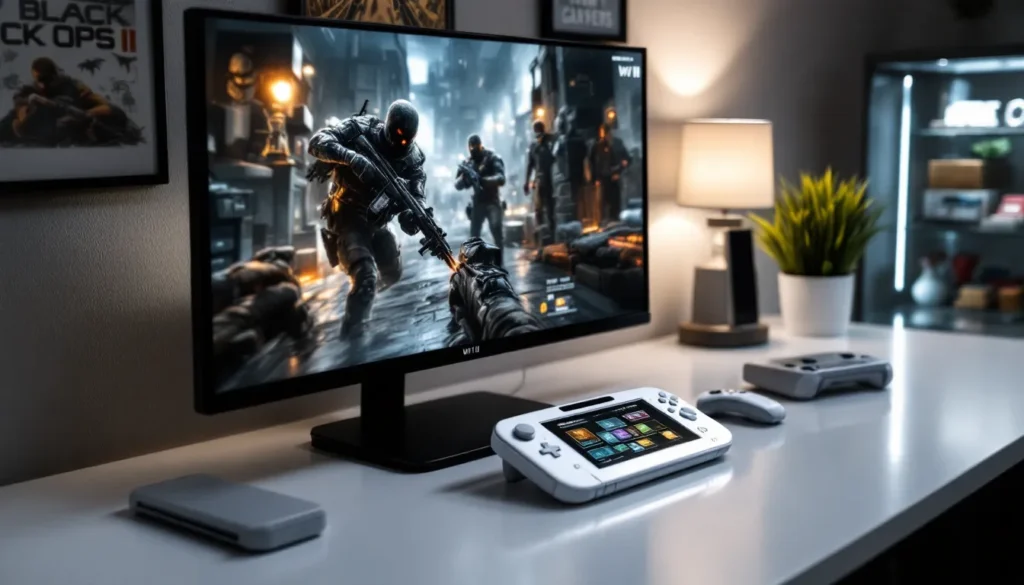
ToggleThe Wii U was Nintendo’s controversial tablet-gaming experiment, and its library reflected that unconventional philosophy. Call of Duty found its way onto the platform, bringing first-person shooter action to a console that most gamers associate with motion controls and family-friendly titles. For those who actually owned a Wii U, and there weren’t many, experiencing Call of Duty through the GamePad’s unique ecosystem was genuinely different. Whether you’re a retro collector dusting off old hardware, a completionist hunting down every platform version of Infinity Ward’s franchise, or simply curious about what Call of Duty on Wii U actually looked like, this guide covers everything worth knowing about the shooter’s presence on Nintendo’s divisive console. We’ll break down which titles landed on Wii U, how the GamePad changed the control scheme, performance specifics, and whether these versions hold any value in 2026’s gaming landscape.
Key Takeaways
- Call of Duty on Wii U includes only three titles—Black Ops II, Ghosts, and Modern Warfare 3—released between 2012 and 2013 as the only shooter entries on Nintendo’s divisive console.
- The Wii U GamePad integration offered asymmetrical multiplayer possibilities and touchscreen features, but competitive players found traditional controls more practical and disabled motion controls entirely.
- Performance compromises were significant: Call of Duty on Wii U ran at 720p with reduced texture quality, lower polygon counts, and frame rate drops from 60 FPS to 50 FPS or below during intense gameplay compared to Xbox 360 and PS3 versions.
- Online multiplayer servers for Wii U Call of Duty games shut down in January 2023, making split-screen local multiplayer and campaign modes the only officially playable experiences today.
- Single-player campaigns and Zombies mode in Black Ops II are fully functional and perform smoothly on Wii U, making them worth experiencing for story-driven players despite multiplayer limitations.
- Collector copies of Call of Duty Wii U games have gained retro value ($20-50 CIB), making physical cartridges worth acquiring now as gaming history artifacts before prices increase further.
What Call of Duty Games Are Available on Wii U?
Not every Call of Duty game made it to the Wii U, which shouldn’t surprise anyone given the console’s modest install base and market positioning. Only a handful of titles in the franchise saw a Wii U release, and they came during a specific window in the console’s lifecycle when publishers were still experimenting with the platform’s potential.
Black Ops II and the Wii U Launch Lineup
Black Ops II (2012) was the marquee Call of Duty experience on Wii U. It launched alongside the console in November 2012 and became the system’s first major multiplayer shooter. This wasn’t a watered-down port, it included the full single-player campaign, multiplayer modes with the GamePad integration, and Zombies, the co-op survival mode that’s become a franchise staple. The game ran at 720p and delivered roughly the same feature set as the 360 and PS3 versions, though with noticeable compromises in visual fidelity and frame rate stability.
Launching with the console meant Black Ops II had no real competition on Wii U for shooter fans. The GamePad’s lower-res touchscreen became a hub for in-game information, showing loadout changes, killstreaks, and map updates without pausing the action. For those unfamiliar, the Wii U’s screen was genuinely innovative for asymmetrical multiplayer, one player could theoretically camp on the GamePad while others used traditional controllers, though this was never a competitive advantage in practice.
Ghosts and Modern Warfare 3 Ports
Call of Duty: Ghosts arrived in November 2013, marking the franchise’s second major Wii U entry. This was the game that shipped alongside the console’s first holiday season of solid third-party support. Ghosts on Wii U featured the campaign, multiplayer, and Squads mode (a PvE-focused alternative to standard multiplayer where players could earn progression offline). The GamePad functionality expanded slightly, allowing players to use the screen for more detailed tactical information.
Modern Warfare 3 (2011) also received a Wii U port, though it released later in the console’s lifecycle as a port of the 360/PS3 version. This was more of a legacy release than a fresh experience. Modern Warfare 3 on Wii U lacked the polish and support of its Xbox and PlayStation counterparts, and player populations were already declining on other platforms by the time this port materialized.
After Ghosts, Activision essentially abandoned the Wii U for Call of Duty. The console’s dwindling audience and the rise of Fortnite and PUBG shifted where shooters were being played. No Advanced Warfare, Black Ops III, Infinite Warfare, or any modern titles made it to the system. The Wii U’s Call of Duty legacy stopped in 2013, making these three games, Black Ops II, Ghosts, and Modern Warfare 3, the franchise’s complete catalog on the platform.
For context on how other platforms evolved, the Call of Duty for PS5 experience demonstrates how dramatically the franchise has scaled up in processing power and visuals over time.
Gameplay and Controls on the Wii U
The Wii U GamePad was the elephant in every room on that console. For Call of Duty, it meant a control scheme that was simultaneously ambitious and awkward, the GamePad fundamentally changed how you aimed, interacted with menus, and navigated the world.
GamePad Integration and Unique Features
Black Ops II and Ghosts on Wii U leveraged the GamePad as both a control device and an information hub. The lower screen displayed a mini-map, killstreak notifications, loadout management, and contextual prompts without pausing gameplay. Players could theoretically tap the touchscreen to execute actions like calling in killstreaks or switching weapons, but in practice, most competitive players kept their hands on the traditional controller layout and ignored the screen entirely.
The GamePad had a gyroscope built in, which some players found useful for fine-tuning aim, similar to motion aiming in Splatoon. But, Call of Duty’s Wii U versions didn’t feature advanced motion control implementation. The aim assist had to compensate for the fact that standard thumbstick aiming was fundamentally less precise than what Xbox 360 and PS3 players experienced.
One legitimate advantage was using the GamePad screen for Squad-based callouts in Ghosts. Players could issue tactical commands by tapping the touchscreen, which was faster than traditional button inputs. This felt gimmicky, but it occasionally provided a slight edge in organized team play.
Adapting to Motion Controls and Touch Screen
Wii U players expecting the motion-heavy experience of the original Wii’s Call of Duty: Modern Warfare (2009) were in for a letdown. The Wii version relied heavily on motion aiming, flicking the remote to aim was the primary control method. The Wii U version didn’t double down on that. Instead, it offered standard dual-stick FPS controls with optional motion aiming as a secondary feature. Most players just turned motion controls off entirely.
The touchscreen was more of a novelty than a game-changer. Tapping to switch weapons or confirm killstreaks cost time compared to traditional inputs, so competitive players simply didn’t use these features. The potential was there, a dedicated Wii U Call of Duty built from the ground up might have delivered something memorable, but these ports felt like the developers were checking a box rather than embracing the hardware.
Aiming sensitivity had to be tuned carefully. The Wii U’s capabilities meant frame rate wasn’t always rock-solid, which made aiming feel sluggish compared to 360/PS3. Many players compensated by cranking sensitivity to maximum, which felt twitchy and unreliable. It’s one reason the Wii U ports developed a reputation for feeling “off” to anyone who’d played Call of Duty elsewhere.
Performance and Graphics Comparison
The Wii U was underpowered even at its 2012 launch. Its GPU was essentially a bespoke Nintendo solution operating at a fraction of the clockspeed of the 360 or PS3. For a fast-paced shooter like Call of Duty, this meant compromises everywhere.
Visual Fidelity Versus Other Platforms
Black Ops II on Wii U ran at 720p native resolution, which matched the 360 and PS3 versions. But, texture quality was noticeably reduced. Characters had less detailed models, weapon textures were simplified, and environmental assets were downgraded. Explosions had fewer particles. Draw distance was shorter, meaning objects and enemies would pop into view more noticeably during intense firefights.
Comparison screenshots show the Wii U version alongside Xbox 360 and PS3 builds, the gap isn’t dramatic, but it’s unmistakable. If you played Modern Warfare 3 on Xbox and then swapped to Wii U, the visual step backward was real. Lighting was slightly flatter, shadows less detailed, and ambient effects more sparse.
Ghosts suffered similar compromises. The Wii U iteration was visually close to the base 360/PS3 version but with reduced visual effects, lower polygon counts on environmental geometry, and simplified animations. Activision wasn’t trying to push Wii U to its limits, these were straightforward ports with optimization cuts taken whenever frame rate became a concern.
For a broader perspective on how Call of Duty visuals have evolved, Call of Duty archives at Questgiggle cover the franchise’s visual progression across multiple eras.
Frame Rates and Loading Times
This is where Wii U’s limitations became genuinely problematic. Black Ops II targeted 60 FPS in multiplayer but frequently dipped to 50 FPS or lower during intense moments. Campaign gameplay was more stable at 60 FPS, but Zombies mode, with its particle effects and crowd of undead, would stutter noticeably. A player using the GamePad while others used Pro Controllers sometimes experienced additional frame hitches as the system struggled to output video to multiple displays simultaneously.
Loading times were brutal by modern standards, even compared to contemporary versions. Campaign levels took 30-45 seconds to load, while multiplayer map loading could stretch past a minute. By 2024-2026 standards, these wait times feel prehistoric. The Wii U’s storage interface and GPU architecture simply couldn’t move data fast enough.
Ghosts was slightly better optimized and more stable at holding 60 FPS in multiplayer, but loading remained a persistent issue. The Wii U version would load a multiplayer map while 360/PS3 players on your team were already spawning and moving.
This performance gap meant Wii U players were at a competitive disadvantage. Dropped frames during gunfights translated to missed shots. Higher input latency from the GamePad’s wireless connection added another layer of responsiveness penalty. Competitive players quickly abandoned the Wii U versions in favor of other platforms.
Multiplayer Community and Online Play
The Wii U installed base was tiny compared to Xbox 360 and PS3. This directly impacted multiplayer on Call of Duty titles for the system. Finding matches was possible during the games’ active years, but the community was always a fraction of what existed elsewhere.
Server Status and Player Base in 2026
In 2026, the Wii U’s online servers have been offline for years. Nintendo shut down online services for Wii U titles in January 2023, meaning Black Ops II, Ghosts, and Modern Warfare 3 are no longer playable online through official servers. Local multiplayer (split-screen modes) still works if you have the hardware and a second controller, but matchmaking and ranked play are gone.
During the Wii U’s operational lifespan (2012-2022), the multiplayer communities were small but occasionally active. Black Ops II, being the launch title, had the healthiest population. A dedicated group of Wii U players stuck with it even as the broader gaming community moved on. You could find matches in Team Deathmatch and Domination relatively quickly during peak hours, though waits were never instant. Playing at off-peak times meant queue times could stretch to several minutes or longer. Ghosts had an even smaller community, most players jumped ship to either stay on 360/PS3 or move to PS4/Xbox One when those launched in 2013.
Today, the Wii U Call of Duty versions exist in a weird state: they’re completely offline officially, but a small community of collectors and retro enthusiasts maintain private servers through third-party solutions. This isn’t officially supported, and we won’t detail the technical specifics here, but interested parties can find fan-run communities dedicated to keeping Wii U shooters alive.
For comparison, the ongoing Call of Duty Warzone cross-platform experience represents how the franchise handles multiplayer now, seamless server infrastructure, millions of concurrent players, and constant updates.
Finding Matches and Connection Quality
When Wii U servers were live, connection quality was acceptable but not exceptional. The Wii U’s Wi-Fi adapter was built-in but produced latency that was noticeable compared to wired connections on 360/PS3. Most serious Wii U players invested in USB ethernet adapters to stabilize their connection.
Netcode on Black Ops II and Ghosts used the same underlying system as other platforms (IW engine for Modern Warfare 3, Treyarch’s engine for Black Ops II), so gameplay feel was technically consistent. But, the smaller player base meant matchmaking times were longer and skill-based matching was less refined. You might get paired against players of wildly different skill levels simply because the pool was small.
Ping times during the Wii U’s online lifespan typically ranged from 80-150 ms depending on regional server selection. This was comparable to playing on other platforms, but the marginal advantage any single connection had was erased by the overall hardware limitations of aiming and frame rate we discussed earlier.
One genuine advantage: Wii U lobbies were virtually cheater-free. The smaller, dedicated community self-policed, and anti-cheat measures worked adequately for the title. You weren’t going up against aimbots or modded accounts nearly as often as you were on other platforms.
Campaign and Single-Player Content
For players who wanted a story-driven experience, the Wii U’s Call of Duty ports delivered the full campaign content alongside multiplayer. This was one area where Wii U versions could hold their own, single-player gameplay didn’t require the same responsiveness demands as competitive multiplayer.
Story Modes and Offline Gameplay
Black Ops II’s campaign follows a non-linear structure jumping between two timelines: the 1980s Cold War and a futuristic 2025. The Wii U version included all missions, cutscenes, and the full branching story structure. Campaign performance was stable at or near 60 FPS, making the single-player experience feel significantly more polished than multiplayer. You could play through the entire campaign offline, and difficulty scaling worked identically to other platforms.
Ghosts’ campaign follows Task Force 141 fighting a war against a shadowy federation. Again, the Wii U version had the complete campaign with all missions and story beats intact. The campaign was replayable with different difficulty settings and unlockable challenges. Like Black Ops II, it ran smoothly in single-player mode without the frame rate drops that plagued multiplayer.
Modern Warfare 3’s campaign (which was ported to Wii U) delivers closure to the Modern Warfare trilogy with a globe-trotting narrative. The Wii U version was faithful to the source, including all campaign missions and collectibles.
Zombies mode in Black Ops II and Squads in Ghosts added substantial offline content. Black Ops II’s Zombies maps, Nuketown Zombies, Die Rise, and Mob of the Dead, were all present. Zombies could be played solo with bots or cooperatively (split-screen) up to four players locally. No online co-op Zombies on Wii U, though, which was a significant limitation compared to other platforms where you could team up with remote friends.
For campaign enthusiasts, the Wii U versions are perfectly serviceable. The stories are unchanged, and single-player performance is stable. Modern Warfare 3 and Black Ops II campaigns stand as solid titles regardless of platform.
Tips and Strategies for Wii U Call of Duty Players
If you’re actually playing Call of Duty on Wii U in 2026, whether through preserved servers or split-screen gameplay, here are tactical considerations specific to the hardware.
Mastering the GamePad Controls
First, accept that the GamePad isn’t optimal. Most competitive players disabled motion controls entirely and used traditional dual-stick aiming. If you’re using motion controls, keep them subtle, the Wii U’s gyroscope has drift issues that accumulate over time, so frequent recalibration becomes necessary.
For aim sensitivity, start lower than you would on other platforms and adjust upward incrementally. The frame rate inconsistency means aiming will feel sluggish at certain moments. Compensating by turning sensitivity to maximum makes your aim twitchy during smooth frames. Find a middle ground.
The Pro Controller is superior to using the GamePad for traditional gameplay. The Pro Controller connects wirelessly and feels more responsive than the GamePad’s heavier input latency. If you’re playing locally or have access to one, use it. The GamePad’s massive screen and weight distribution make extended play sessions tiring.
Don’t use the touchscreen for in-combat actions unless you absolutely must. Switching weapons via button is faster than tapping the screen. Calling in killstreaks with the d-pad beats trying to locate and tap a target on a screen you’re holding at chest level during a firefight.
Competitive Loadouts and Game Modes
In Black Ops II multiplayer, ICBM (the nuclear killstreak) was theoretically possible on Wii U just like other platforms, but the aim inconsistency made reaching high killstreaks genuinely difficult. Instead, focus on achievable killstreaks: RC-XD (early game pressure), Attack Helicopter (area denial), and Orbital VSAT (intel advantage). These require 7, 10, and 12 kills respectively, making them realistic goals even with the Wii U’s control disadvantage.
Weapon selection matters more on Wii U than other platforms. The FAMAS burst rifle was dominant in Black Ops II because it’s more forgiving than full-auto weapons when frame rate dips. The Skorpion SMG (high fire rate, tight accuracy) compensated for aim inconsistency because missing one shot mattered less. Avoid long-range snipers unless you’re playing split-screen casually, the latency and aim feel made quickscoping unreliable.
In Ghosts multiplayer, the Vector CRB SMG was similarly forgiving, and the Honey Badger (muted assault rifle) provided consistent mid-range performance. Predictable weapon handling beats raw gun stats on Wii U.
Game modes matter too. Team Deathmatch is the safest choice, performance issues in one fight don’t affect the overall match outcome. Domination works but map control becomes harder when your aim isn’t perfectly responsive. Search and Destroy (one-life elimination mode) is brutal on Wii U: a single frame drop at the wrong moment costs your team the round.
Split-screen local multiplayer is where Wii U Call of Duty actually shines. Both players see the same action, and the experience is balanced. For casual matches against friends, the Wii U versions are genuinely fun, frame rate drops and all. The experience is closer to how the original Xbox or PS2 handled split-screen shooters, stable, predictable, and less dependent on precise aiming.
Legacy Status and Why Collectors Still Value These Games
In 2026, Wii U Call of Duty games occupy a specific niche: they’re not sought after by competitive players, but they’ve developed genuine collector value among retro gaming enthusiasts.
Rarity and Retro Gaming Appeal
Physical copies of Black Ops II and Ghosts for Wii U command prices higher than their 360/PS3 equivalents. CIB (complete in box) copies of Black Ops II can sell for $30-50 depending on condition, while loose discs go for $15-25. Ghosts typically runs $20-35 CIB. These aren’t rare by traditional video game collecting standards, but they’re less common than their counterparts on mainstream platforms, which drives up value.
The appeal is partially historical. The Wii U was a commercial failure, and its library is increasingly viewed through a lens of curiosity and nostalgia. Collectors want to experience what it was like to play major franchises on unconventional hardware. Call of Duty on Wii U represents a specific moment in gaming, 2012-2013, when even publishers still believed in the console’s potential. That’s worth documenting in a collection.
Cultural factor: the Wii U has been extensively reassessed by gaming historians and retro enthusiasts. What was derided as a failure in real-time now looks interesting as an artifact. The GamePad experimentation, the asymmetrical gameplay, and the unique controller schemes are now viewed as ambitious rather than gimmicky. Call of Duty’s presence on Wii U is part of that story.
Content creators and retro streamers have contributed to renewed interest. Watching a modern player experience Call of Duty through the GamePad, and struggling with the unique control scheme, makes for engaging content. YouTube creators covering “bad ports” or “console oddities” have highlighted Wii U Call of Duty, driving collector interest.
The server shutdown in 2023 has made physical cartridges more valuable as artifacts. You can’t play these games online anymore officially, which adds a sense of preservation to collecting them. Owning a copy is documentation of a dead service.
Compare this to the broader franchise evolution: Call of Duty: Cold War on PS4 represents modern console experiences, while Wii U versions represent a specific historical footnote. That distinction has value to collectors.
For anyone serious about gaming history or completionist collecting, the Wii U Call of Duty trilogy is worth owning, not to play competitively, but to understand how the franchise adapted to unconventional hardware and what the Wii U experiment actually meant for third-party developers.
Conclusion
Call of Duty on Wii U was a noble experiment that faced inevitable hardware limitations. The GamePad’s promised innovations didn’t translate to competitive advantages, and the Wii U’s processing power couldn’t match what players experienced on 360 and PS3. Black Ops II, Ghosts, and Modern Warfare 3 on the system are playable, complete, and historically interesting, but they’re not how you’d want to experience these games if alternatives exist.
For casual players and split-screen local multiplayer, they’re functional and occasionally fun. Campaign modes work perfectly fine. For collectors, they’re worth owning as documentation of gaming history and the Wii U’s failed push toward mainstream adoption.
In 2026, the online components are dead, and finding communities to play with is nearly impossible through official channels. The hardware is aging, the controllers have known durability issues, and these games are increasingly expensive as scarcity drives up collector value. If you’re genuinely interested in experiencing Call of Duty on Wii U, acquiring the games now makes sense, they’ll only become harder to find as the retro gaming market consolidates around the most collectible platforms.
The Wii U Call of Duty era lasted from 2012 to 2013. It’s a completed chapter of franchise history, preserved in physical media and accessible for anyone willing to track down the hardware. Critical reviews from publications like GameSpot and Game Rant documented these versions’ shortcomings at the time, and Metacritic scores reflect the gap between these ports and mainstream platform versions. Understanding that gap is key to appreciating what Wii U Call of Duty actually was.