



Table of Contents
ToggleThe Ghost mask has become one of the most recognizable pieces of gear in the Call of Duty universe. Whether you’re drawn to it for its tactical aesthetic, its role in the campaign’s lore, or simply because it looks absolutely cool in multiplayer, understanding how to unlock and customize this iconic operator skin matters. Over the years, the Ghost mask has evolved across multiple game titles, each iteration refining the look while maintaining that signature skull design that’s instantly identifiable on any battlefield. In 2026, whether you’re playing on PC, PlayStation, or Xbox, options for rocking the Ghost mask are more varied than ever, and this guide will walk you through everything you need to know.
Key Takeaways
- The Ghost mask represents Simon Riley, an iconic SAS operator whose skull-patterned design balances tactical realism with intimidating visual impact across the Call of Duty franchise.
- You can unlock the Call of Duty Ghost mask through three primary methods: campaign completion, seasonal multiplayer challenges, or battle pass and store purchases for premium variants.
- Ghost cosmetics are purely visual and don’t affect gameplay mechanics like hitbox or movement speed, but the high-contrast skull design is more visible on bright maps in competitive play.
- Customization options extend beyond the mask itself to include operator bundles, weapon blueprints, execution animations, and voice lines that let you create a cohesive, personalized loadout.
- The Ghost operator has evolved significantly across Modern Warfare, Infinite Warfare, and Modern Warfare II, with each iteration adding enhanced textures, visual fidelity, and cosmetic variations while maintaining core design identity.
- Professional esports players frequently choose Ghost cosmetics to signal experience and commitment to the franchise, making it a status symbol in both casual ranked and CDL competitive circuits.
What Is The Ghost Mask In Call Of Duty?
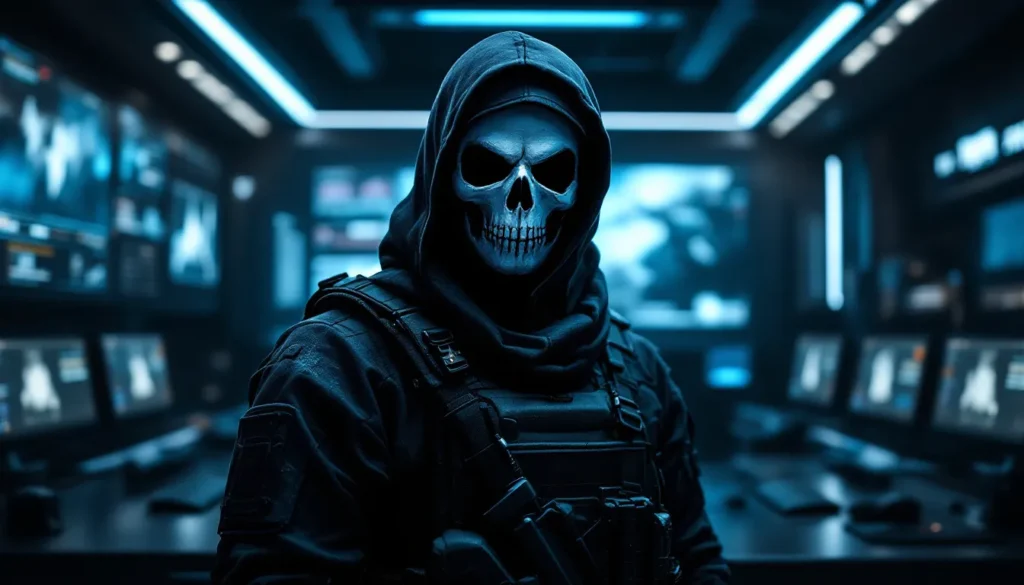
The Ghost mask isn’t just cosmetic fluff, it’s the signature look of one of Call of Duty’s most iconic operators. The mask represents Simon Riley, the hardened British SAS operative who’s central to the franchise’s story across multiple titles and timelines.
Origins And Design Philosophy
The call of duty ghosts mask first gained prominence in Call of Duty: Ghosts (2013), where it served as the visual identity for the elite Ghosts program, a clandestine military unit. The design draws inspiration from real-world tactical gear: a skull-patterned balaclava or face covering that combines intimidation with practicality. Infinity Ward designed it to evoke danger and professionalism simultaneously, giving players a character that felt grounded even though its dramatic flair.
What makes the design work is its simplicity. It’s not oversized or cartoonish. The skull pattern is stark and recognizable, yet functional-looking, something a real operator might actually wear. This balance between tactical realism and iconic imagery is why it’s resonated with players for over a decade.
The Evolution Across Game Titles
The Ghost mask didn’t stay confined to Ghosts. It evolved significantly:
Call of Duty: Infinite Warfare brought a sci-fi twist, adjusting the design for a futuristic aesthetic while keeping the core skull motif intact. Modern Warfare (2019) reimagined the mask with incredible detail, giving it weathered textures and subtle variations in fabric and wear that made it feel lived-in. The Modern Warfare II (2022) version pushed this further, adding more customization layers and visual fidelity that players on next-gen consoles could really appreciate.
Each iteration refined the materials, added lighting details, and expanded cosmetic variations, think different skull patterns, color schemes, and accompanying cosmetics. The call of duty skull mask variants have ranged from classic gray-and-black patterns to neon glows in Warzone events. If you’ve seen a ghost mask call of duty in recent multiplayer lobbies, you’re likely looking at one of these evolved designs, complete with dynamic shadows and material reflections that weren’t possible in earlier generations.
The consistency across titles shows that developers understand the mask’s importance to player identity. It’s become shorthand for “serious operator” in the Call of Duty community.
How To Unlock The Ghost Mask
Getting your hands on the Ghost mask requires different approaches depending on which Call of Duty title you’re playing and how much you’re willing to invest in unlocks.
Campaign Unlock Methods
In many Call of Duty titles, progressing through the campaign rewards you with operator skins and cosmetics. In Modern Warfare II, completing campaign missions, especially on higher difficulties, unlocks operator variants including Ghost skins. Some versions require you to finish specific campaign chapters or meet optional objectives (like no-alert runs or completing missions within time limits).
The advantage here is straightforward: no grinding, no RNG, no spending. You earn it through story progression. But, campaign unlocks often grant base versions rather than the premium variants you’ll see in multiplayer playlists. It’s the foundation of your Ghost collection, but not necessarily the full picture.
Multiplayer Challenges And Requirements
Multiplayer challenges offer another path. These rotate seasonally and might require you to:
- Earn eliminations with specific weapon types
- Complete matches in particular game modes
- Achieve killstreaks or objective-based goals
- Survive rounds in tactical modes
For example, a challenge might read: “Earn 25 eliminations with assault rifles in multiplayer matches” to unlock a call of duty ghost mask variant. These typically take several hours of gameplay depending on your skill level and the specific requirements.
The grind varies significantly by season. Some challenges are refreshingly straightforward: others feel designed to stretch your playtime. Check your seasonal challenge list, it’ll show exact requirements and progress toward each unlock. This method ensures you’re actually playing the game to earn the cosmetic, which some players appreciate.
Battle Pass And Store Options
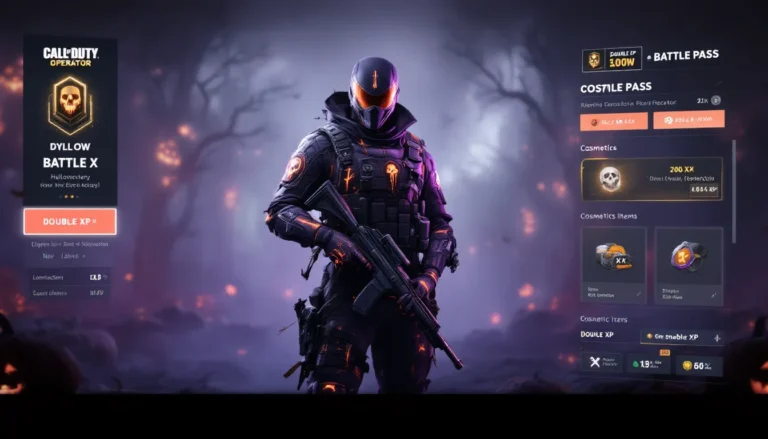
The most direct route involves the battle pass or the store. Modern Call of Duty titles feature seasonal battle passes that include operator skins, weapon blueprints, and cosmetics. Ghost operators frequently appear in battle pass tiers, sometimes as free rewards in the base pass, sometimes in the paid premium track.
Premium cosmetics land in the in-game store, typically priced between $15 and $20 USD for operator bundles. These bundles usually include the operator skin, an alternate cosmetic variant, and sometimes weapon blueprints or execution animations. The store refreshes regularly with new offerings.
If you’re serious about collecting multiple ghost mask call of duty variants, different color schemes, regional designs, or limited-edition versions, expect to spend money or maintain an active battle pass across seasons. The trade-off is immediate access to premium cosmetics without grinding challenges.
Customization Options For Ghost Operators
Once you’ve unlocked a Ghost operator, the real fun begins. Modern Call of Duty titles offer extensive cosmetic customization that lets you make the operator genuinely yours.
Cosmetic Variations And Skins
Ghost operators come with multiple cosmetic tiers and variants:
Base skins feature the standard skull mask design with regional or outfit variations (e.g., Desert Ghost, Arctic Ghost, etc.). These are your foundation.
Premium variants add visual enhancements: weathered fabrics, glowing accents, alternate skull patterns, or entirely different outfit combinations. Some variants feature neon highlights that glow in dark maps, making Ghost more visually distinctive in low-light tactical scenarios.
Limited-edition cosmetics tie to seasonal events or collaborations. For instance, special Halloween events might feature glow-in-the-dark masks, or crossover events could bring unexpected variations you won’t see in typical cosmetic rotations.
Beyond the mask itself, you can customize:
- Operator bundles that pair the mask with matching gear (tactical vests, gloves, boots)
- Execution animations that define how your operator performs finishing moves
- Finishing move emotes for post-elimination taunts
- Voice lines that change operator dialogue in multiplayer lobbies
The depth means two players rocking Ghost can look noticeably different depending on their cosmetic choices. One might be full tactical black-and-gray: another could be rocking a neon-accented variant with bright accessories.
Pairing With Weapons And Loadouts
Cosmetics extend beyond just the operator. Weapon blueprints coordinate with Ghost operator skins to create cohesive loadouts. Developers often release Ghost-themed weapon bundles, assault rifles, SMGs, sniper rifles, that feature matching color schemes and design language.
For example, if you’ve unlocked an Arctic Ghost variant, pairing it with a blueprint weapon featuring frost accents and cold-tone finishes creates visual harmony. It’s not mechanically advantageous (blueprints are purely cosmetic in most Call of Duty titles), but aesthetically it elevates the entire presentation.
Gaming communities on platforms like Discord and Reddit often share loadout screenshots showing coordinated Ghost cosmetics paired with matching weapons, camo, and finishing moves. It’s become part of the meta, not for gameplay, but for player expression and style.
Performance Impact And Settings
A common question: does wearing a cosmetic like the Ghost mask affect gameplay performance or visibility?
Visual Customization Without Gameplay Changes
The short answer is no, cosmetics in Call of Duty are purely visual. The Ghost mask doesn’t alter your hitbox, movement speed, ADS speed, or any mechanical stat. Infinity Ward, Sledgehammer, and Raven Software enforce strict cosmetic integrity to keep gameplay fair.
What does matter is visibility. The call of duty skull mask with its white-on-dark contrast is relatively visible at medium and long ranges compared to all-black operators. In competitive multiplayer, some players prefer lower-contrast cosmetics for subtler silhouettes, especially on bright maps. But, at close range or in cluttered environments, the difference is minimal, player positioning and gunplay matter far more.
Visual settings (brightness, contrast, color blind modes) can make any operator skin more or less visible depending on your monitor setup and graphics settings. Adjusting in-game brightness or using color-blind friendly HUD options affects how you perceive all cosmetics equally.
Cross-Platform Appearance Consistency
One strength of modern Call of Duty is cosmetic consistency across platforms. Whether you’re playing on PC, PS5, Xbox Series X, or even older-generation consoles, the Ghost mask appears with the same design and coloring. Developers maintain this consistency to ensure fair competitive play, no platform should have a visual advantage.
There are minor differences due to hardware: PC and next-gen consoles render higher-fidelity textures with better lighting, while last-gen versions use slightly simplified materials. But the cosmetic itself, the skull pattern, color scheme, overall silhouette, remains identical. This means your Ghost operator investment carries across platforms if you own the game on multiple systems.
Graphics settings let you adjust how detailed cosmetics appear (higher texture resolution on max settings), but this doesn’t change the cosmetic itself, just how sharply it’s rendered. Even on low graphics settings, your Ghost mask will display the same iconic design.
Ghost Mask In Competitive Play And Esports
The Ghost operator has carved out a significant role in competitive Call of Duty, both in casual ranked play and professional esports circuits.
Popularity Among Professional Players
Ghost operators show up frequently in professional esports matches, particularly in the CDL (Call of Duty League). Why? The operator’s identity goes beyond aesthetics, it’s psychology. Professional players adopt Ghost because it signals experience and commitment to the franchise. It’s a recognizable “look” that viewers associate with skill and tactical play.
Many esports organizations encourage their players to use Ghost cosmetics during branded events, reinforcing team identity while leveraging the operator’s iconic status. If you watch CDL broadcasts or high-level competitive tournaments on platforms like GameSpot, you’ll regularly see Ghost in player lineups, especially when teams want to present a cohesive, professional appearance.
Beyond marketing, Ghost cosmetics have become a subtle status symbol. New players gravitate toward easily unlocked skins: experienced players tend to sport premium, limited-edition variants earned through seasonal grinds or store purchases. In that sense, a decked-out Ghost operator cosmetic signals “I’ve invested time in this game.”
Tactical Advantages And Visibility Factors
While cosmetics don’t alter mechanics, visibility considerations do factor into competitive loadouts. In professional play, teams sometimes discuss operator selection based on map lighting and sightline characteristics.
The Ghost mask’s high-contrast skull design makes it more visible than all-black operators on bright maps like Nuketown Island or Shoot House. Conversely, on darker maps with heavy shadows, the contrast becomes less of a disadvantage. Competitive players who grind ranked matches often test different operator skins across maps to find their optimal visibility balance.
That said, pro-level play prioritizes positioning, map control, and gunfight mechanics far above cosmetic visibility. A skilled player with a high-visibility cosmetic beats a mediocre player with an invisible one every time. The visibility discussion becomes relevant only when skill levels are equal, and even then, it’s marginal.
Recent coverage from GameRant highlighted how cosmetic choices in esports reflect broader meta shifts. As map pools rotate and competitive rules evolve, players sometimes shift cosmetic preferences. It’s less about the ghost mask call of duty itself and more about adapting to the current competitive environment.
For reference, related tactical gear like Call of Duty Night Vision Goggles demonstrates how cosmetics integrate into competitive loadout discussions, they’re part of the larger player customization ecosystem, even if they don’t directly impact gameplay outcomes.
Conclusion
The Ghost mask remains one of Call of Duty’s most iconic cosmetics, and rightfully so. Whether you’re drawn to its tactical aesthetic, its franchise legacy, or the psychological edge of wearing a cosmetic that signals experience, the pathways to obtaining it are clear: campaign progression, seasonal challenges, or the battle pass.
Unlocking is half the journey: customizing your Ghost operator to reflect your personal style transforms it from generic cosmetic to genuine player identity. Pair it with matching weapon blueprints, coordinate color schemes, and you’ve built a loadout that feels cohesive and intentional.
In competitive play and casual multiplayer alike, Ghost remains relevant, proof that good design transcends gameplay mechanics. The mask works because it balances intimidation with professionalism, novelty with consistency. It’s evolved across multiple game titles without losing its core identity.
Moving forward into 2026 and beyond, expect continued cosmetic variants and seasonal updates to the Ghost operator lineup. The franchise shows no signs of retiring this operator, and player demand ensures it’ll remain in the cosmetic rotation. Whether you’re working toward unlocking your first Ghost skin or hunting down limited-edition variants, the journey reflects your investment in the Call of Duty universe, and that’s precisely what makes the Ghost mask more than just a cosmetic. It’s a statement about who you are as a player.