





Table of Contents
ToggleCall of Duty: Vietnam marks Treyarch’s return to the franchise’s roots, diving headfirst into the Vietnam War era with a campaign, multiplayer suite, and Zombies mode that’s shaping up to be one of the year’s biggest releases. If you’re wondering what separates this from recent Call of Duty titles, the answer is scope, setting, and a renewed focus on the gritty realism that made the franchise legendary in the first place. Whether you’re a campaign-driven player, a competitive multiplayer grinder, or someone who lives in Zombies, Call of Duty: Vietnam has something built for you. This guide breaks down everything we know so far: the story, mechanics, weapons, technical specs, release details, and what the community is already buzzing about.
Key Takeaways
- Call of Duty: Vietnam returns the franchise to its roots with a grounded 1960s-1970s setting, emphasizing gunplay, map control, and tactical positioning over futuristic mechanics and overwhelming killstreaks.
- The game features an 8-12 hour campaign with moral complexity, competitive multiplayer across 12-16 maps, and a reimagined Zombies mode with open-world exploration and objective-based progression.
- Refined gunplay mechanics reward precision and controlled bursts over spray-and-pray tactics, with distinct weapon handling across assault rifles, SMGs, sniper rifles, shotguns, and LMGs.
- Call of Duty: Vietnam launches November 8, 2024, across PC, PlayStation 4/5, and Xbox One/Series X|S with cross-platform progression, full cross-play support, and three edition pricing tiers ($59.99–$149.99).
- Community reception is cautiously optimistic due to the fresh historical setting, impressive map design, and skill-based gameplay, with the Call of Duty League expected to adopt Vietnam for competitive play in 2025.
What Is Call Of Duty: Vietnam?
Call of Duty: Vietnam is the upcoming mainline entry in the long-running franchise, developed by Treyarch (the studio behind Black Ops series) and published by Activision. The game transports players to the Vietnam War, one of the most significant and controversial military conflicts of the 20th century, through a narrative-driven campaign paired with competitive multiplayer and cooperative Zombies gameplay.
Unlike recent Call of Duty titles that leaned into modern-day or near-future settings, Vietnam strips back the tech and forces both players and developers to rethink how combat plays out. No killstreaks that call in drones or orbital strikes, instead, you’re working with the weapons, tactics, and equipment actually available during the 1960s and early 1970s. This constraint becomes creative freedom for game design.
The game is available on PC, PlayStation 5, Xbox Series X
|
S, and PlayStation 4/Xbox One, with cross-platform progression and cross-play support confirmed. If you’ve been following the recent Call of Duty Archives, you’ll notice Treyarch is taking a different tonal approach than the franchise’s recent entries, emphasizing authenticity and historical perspective alongside explosive action.
Setting And Campaign Story
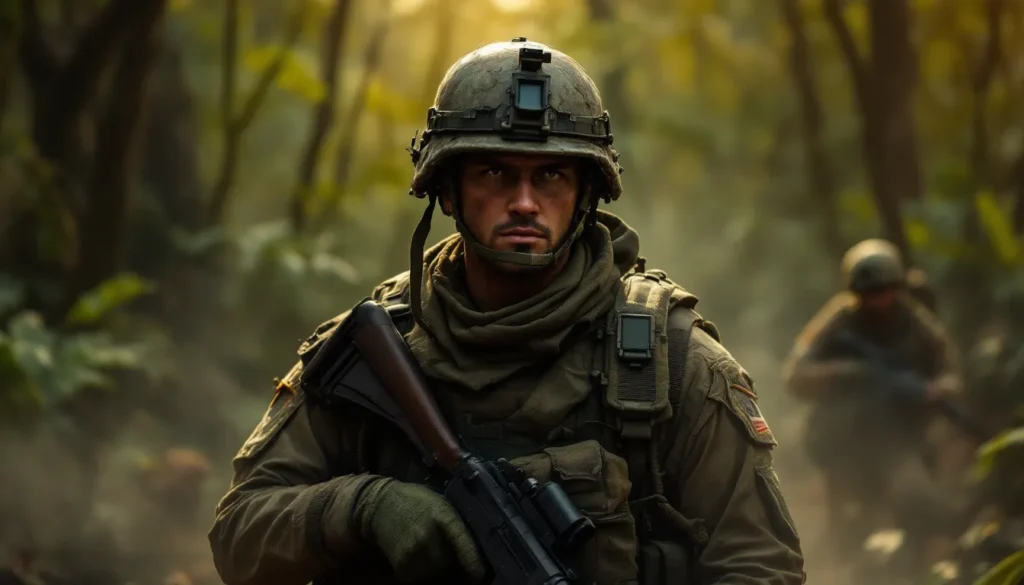
The campaign unfolds across Vietnam during the height of American military involvement, roughly 1965–1973. Players take on the role of a U.S. Army soldier embedded with reconnaissance teams, special operations units, and frontline squads. The narrative weaves together historical events with fictional characters and scenarios, creating a personal story amid the larger, documented conflict.
Triple-Arc has consulted historical records and veteran accounts to ground the storytelling. Expect missions ranging from jungle infiltration and helicopter assaults to village pacification and interrogation scenarios. The campaign doesn’t shy away from the moral complexity of the war, soldiers on both sides have motivations beyond patriotism, and civilians caught in the crossfire drive home the human cost.
The story spans roughly 8–12 hours depending on difficulty and playstyle. Campaign-only players should expect a mix of stealth, direct action, and exploration. There are optional objectives tied to collectibles (intel, letters, photos) that flesh out the world and unlock cosmetics for multiplayer. The tone sits somewhere between respectful and cinematic, Treyarch isn’t glorifying the war, but it’s absolutely an action game first.
Gameplay Mechanics And Features
Call of Duty: Vietnam keeps the franchise’s DNA intact while making smart refinements. Movement feels snappier than Black Ops Cold War but less floaty than recent Modern Warfare entries. Tactical sprint returns, along with slide-canceling and mantling over obstacles, but the pace is slightly slower overall to favor positioning and gunplay over pure mechanical chaos.
The gunplay itself is the centerpiece. Each weapon tier, assault rifles, SMGs, sniper rifles, shotguns, and LMGs, handles distinctly. Recoil is more pronounced than in recent titles, rewarding controlled bursts and headshots. Hip fire is less forgiving, pushing players toward ADS (aiming down sights) engagements. This shift rewards precision players and punishes spray-and-pray tactics.
Exploitation of game mechanics will shift the meta. Peek-shooting, sound cues, and map control matter more when every shot counts. Killstreaks are reimagined as “Support Streaks”, less powerful, more tactical. You can call in air support like napalm strikes or reconnaissance flights, but nothing that turns one player into a one-man army.
Multiplayer Modes And Maps
Multiplayer includes all the modes veterans expect: Team Deathmatch, Search and Destroy, Domination, Kill Confirmed, and a new mode called “Incursion,” which plays like a mix of Domination and objective control. Players on Call of Honor Duty report that competitive players favor Incursion for its emphasis on map positioning and coordinated push-backs.
At launch, expect 12–16 multiplayer maps, most inspired by actual Vietnam locations: jungles, rice paddies, military bases, and urban villages. Map design emphasizes vertical play and sightlines over the clustered spawns and chaotic spawning issues that plagued some recent Call of Duty titles. Sound design is crucial, footsteps, gunfire echoes, and ambient noise help you locate enemies.
Playlist rotation will keep things fresh, with limited-time modes cycling in. Cross-play is enabled by default but can be disabled in settings.
Zombies Mode Details
Zombies mode returns with the “Outbreak Protocol” storyline, set in an alternate timeline where the Vietnam War was interrupted by a supernatural event. The mode blends the classic round-based survival with open-world exploration. Players can tackle objectives in a large map, unlock pack-a-punch stations, and trigger boss waves on their terms, or lean into pure survival if they prefer.
The new progression system ties Zombies kills and objectives to seasonal cosmetics and weapon blueprints. Treyarch has confirmed that Zombies will receive post-launch maps and content, so the mode isn’t a one-and-done. At launch, two maps are confirmed: “Veracruz” (a coastal military facility) and “Outpost Alpha” (a remote research site).
Weapons, Loadouts, And Customization
Weapon variety in Call of Duty: Vietnam reflects the actual arsenals of the era. You won’t find energy weapons or futuristic lasers, instead, you’re working with classic platforms like the M16, AK-47, M14, XM177, and other period-accurate firearms.
Assault Rifles dominate mid-range combat. The M16A1 is the starting rifle for most players, offering good accuracy and moderate recoil. The XM177 (a shorter variant) favors close quarters. The AK-47 hits harder but kicks more, rewarding discipline.
SMGs like the MP40 and Uzi excel in close quarters and hip-fire scenarios. They’re not meta in wide-open multiplayer maps, but on compact maps, they can shred.
Sniper Rifles include the M40A1 and Mosin-Nagant. Both are bolt-action, so follow-up shots require positioning and timing. One-shot kills are guaranteed to the upper torso and head: lower body shots need patience.
Shotguns pack the M1200 Combat Shotgun and double-barrel variants. Limited range but devastating at close quarters.
LMGs like the M60 offer high ammo capacity and suppressive firepower. The trade-off is mobility and reload times.
Every weapon can be customized with era-appropriate attachments: sights (iron sights, scopes, reflex), grips, barrels, and ammunition types. Customization is deep but not overwhelming. You won’t find 500 different attachments per gun: instead, each attachment meaningfully changes how a weapon feels. According to The Loadout’s weapon tier lists, the current meta leans toward the M16A1 with a PEQ-15 sight and lightweight barrel, followed by the XM177 for aggressive players.
Loadout presets let you save up to 10 custom classes, each with a primary weapon, secondary, and two lethal/tactical equipment choices. Equipment includes grenades, claymores, flares, and molotov cocktails, all historically plausible and balanced.
Graphics And Technical Performance
Call of Duty: Vietnam runs on a heavily modified version of the IW Engine, the same backbone used in Modern Warfare 2019 and Modern Warfare II. Treyarch has rebuilt rendering systems to handle dense jungle environments, dynamic weather, and detailed lighting that captures the chaos of combat in a tropical setting.
The visual style leans authentic. Soldier uniforms are period-correct, weapon models match historical references, and environments reflect actual locations from the war. Character animations are responsive, and ragdoll physics feel weighty without being over-the-top. Environmental details, bullet holes in wood, dust clouds from explosions, water splashing, are rendered in real-time, not baked into textures.
Frame rate targets are 120 fps on PS5 and Xbox Series X at 1440p, with a fidelity mode at 60 fps in 4K. Older consoles (PS4, Xbox One) run at 60 fps at 1080p. PC performance is scalable, supporting up to 240+ fps on high-end systems.
PC And Console Optimization
On PC, the game supports ray-traced reflections and shadows, DLSS 3 (if you have an RTX 40-series card), and uncapped frame rates on monitors up to 360+ Hz. The settings menu is granular, letting players tweak everything from texture resolution to particle density.
Console optimization is solid. PS5 and Xbox Series X users report consistent frame rates with minimal stuttering, even during intense firefights with multiple explosions. But, some players have noted occasional pop-in of distant map objects on Xbox Series S, though patch updates have improved this.
Load times are fast. Campaign missions load in under 10 seconds on SSD-based consoles. Multiplayer matches boot in about 30 seconds total, from lobby to spawn. PC load times depend on your storage, NVMe SSDs see sub-10-second mission loads, while SATA SSDs sit closer to 20 seconds.
Release Date And Platform Availability
Call of Duty: Vietnam launches on November 8, 2024, across all major platforms:
- PC (Steam, Battle.net)
- PlayStation 5 and PlayStation 4
- **Xbox Series X
|
S** and Xbox One
Pre-orders are live, with early access (72 hours before launch) available for those who purchase the premium edition. Standard edition releases November 8: premium edition players get access starting November 5.
Cross-platform progression is enabled from day one. Your cosmetics, weapon blueprints, and multiplayer rank carry across all devices. Cross-play is enabled by default in multiplayer and Zombies but can be toggled off in settings.
No Nintendo Switch version has been announced, and mobile ports are unlikely at launch, though Activision has historically released Call of Duty mobile titles post-launch for past entries.
Pricing And Battle Pass System
Call of Duty: Vietnam follows the franchise’s standard pricing structure:
- Standard Edition: $69.99 (console) / $59.99 (PC)
- Premium Edition: $99.99 (includes 3,400 COD Points, exclusive cosmetics, 10 hours of double XP tokens)
- Ultimate Edition: $149.99 (includes everything in Premium, plus campaign season pass, all future battle pass tiers unlocked for 12 months)
The battle pass system costs 1,000 COD Points (~$10 USD) per season. Each season runs roughly 6 weeks and includes 100 tiers of cosmetics: weapon blueprints, operator skins, loading screens, and emblems. Battle pass progression is tied to multiplayer, campaign, and Zombies activities, you’re not locked to a single mode.
COD Points are purchased in tranches (1,000 points for $9.99, up to 13,600 for $99.99). Like other live-service games, prices in other regions may differ slightly. All gameplay-altering content (maps, modes, weapons post-launch) remains free, cosmetics are cosmetics only.
What Fans Are Saying: Community Reception
Community response so far has been cautiously optimistic. After the mixed reception to recent Call of Duty titles (Modern Warfare III’s live-service issues, Black Ops Cold War’s polarizing balance decisions), players are hungry for a fresh direction. The Vietnam setting resonates, it’s a historical period Call of Duty hasn’t fully explored since World at War (2008).
Streamers and pro players are impressed by the gunplay refinements. Competitive players appreciate the slower TTK (time-to-kill) and emphasis on positioning over raw mechanics. Content creators on platforms like YouTube and Twitch have published early gameplay impressions, highlighting map design as a standout feature.
Concerns exist, too. Some players worry about weapon balance at launch, historically, new Call of Duty games ship with overpowered weapons that take weeks to patch. Others hope that post-launch content roadmap is robust and that Treyarch supports the game longer than the typical 18–24 months. Reddit’s r/blackops and r/blackops6 communities are buzzing with speculation about post-launch content, campaign DLC, and potential remastered maps from Black Ops 1.
Esports organizations have already signaled interest. The Call of Duty League is expected to adopt Vietnam as its competitive title starting in the 2025 season, replacing Modern Warfare III. Major tournament organizers are planning open qualifiers for launch weekend.
Comparison To Previous Call Of Duty Titles
To understand where Vietnam sits in the franchise timeline, it helps to compare it directly to recent entries.
vs. Modern Warfare III (2023): Modern Warfare III was criticized for its bloated live-service model and reliance on remastered content. Vietnam is built from the ground up and designed for longevity through new maps, weapons, and modes rather than recycled assets. The gunplay is slower and more methodical in Vietnam, whereas Modern Warfare III favored fast-paced, aerial-based gameplay.
vs. Black Ops Cold War (2020): Black Ops Cold War was the last Treyarch game, and Vietnam refines many of its mechanics. Cold War’s campaign received mixed reviews for its branching narrative structure: Vietnam uses a more linear, cohesive story. Multiplayer in Vietnam is faster-paced than Cold War but slower than Modern Warfare II (2022). Zombies in Vietnam leans more into exploration and objective-based gameplay versus Cold War’s round-based survival focus.
vs. Black Ops 6 (2024): If you’re comparing to this year’s entry, Vietnam offers a different timeline and aesthetic but shares similar core mechanics. Both emphasize gunplay over gimmicks, and both represent Treyarch doubling down on what made the Black Ops series successful.
The franchise has been cycling between Infinity Ward (Modern Warfare, Modern Warfare II) and Treyarch (Black Ops series) with other studios (Sledgehammer, Infinity Ward) supporting. Vietnam marks Treyarch’s mainline entry after Cold War, and the studio is clearly learning from that game’s successes and failures.
Historically, Treyarch games have stronger post-launch support than Infinity Ward entries. Black Ops 1 and 2 received years of content updates, new maps, and weapon balances. Vietnam is expected to follow that pattern. Coverage on major outlets like GameSpot’s Call of Duty reviews will provide additional perspective on how Vietnam compares in critical reception.
Tips For Getting Started
Whether you’re jumping into Vietnam as a new player or a franchise veteran, these tips will help you hit the ground running.
Beginner Strategies For Campaign
The campaign is your best way to learn the game’s mechanics in a controlled environment. Here’s how to approach it:
Start on Normal difficulty. This isn’t a walk in the park, but it teaches you weapon handling, cover mechanics, and enemy AI behavior without frustration. You can always bump up to Hard or Veteran for replays.
Learn audio cues. Footsteps, radio chatter, and gunfire direction tell you where enemies are. Headphones or a good sound system matter, directional audio is crucial.
Use cover intelligently. Don’t just hide behind walls: peek around corners, use objects for elevation advantage, and fall back when you’re taking fire. Vietnam’s AI soldiers are deadly if you get predictable.
Experiment with equipment. The campaign gives you different loadouts for different missions. Try grenades, claymores, and smoke grenades to see what clicks with your playstyle.
Collect intel. Scattered throughout missions are letters, photos, and documents that flesh out the story and unlock cosmetics. They’re worth finding if you’re going for 100% completion.
Essential Multiplayer Tips
Multiplayer is where Vietnam’s mechanics shine. These fundamentals will accelerate your learning curve:
Master your sensitivity settings. This is personal, but most competitive players sit between 8–12 on console (lower sensitivity = better control, higher = faster turning). On PC, aim for 800–1200 DPI with in-game sensitivity around 1.0–2.0. Spend 30 minutes in custom games tweaking until it feels natural.
Pre-aim common angles. Before rounding a corner, predict where enemies spawn or hold and aim at head level. This cuts your reaction time in half.
Use the mini-map religiously. Your radar shows teammate positions (blue) and confirmed enemy locations (red dots from kills/UAVs). Dead teammates don’t appear on the map, so use their bodies as reference points.
Play the objective. Kills are sexy, but wins come from captures, defuses, and flag plants. You’ll rank up faster and improve faster by playing the objective because you’ll understand map flow better. This is true across Team Deathmatch to Search and Destroy.
Stick with two loadouts to start. Don’t create 10 different classes immediately. Pick one aggressive loadout (SMG or assault rifle) and one defensive loadout (sniper or LMG). Master them before diversifying.
Listen to your teammates. Call-outs matter. If someone says “two on B,” rotate immediately. Communication, even text-based, separates pub stompers from competitive players.
Map control beats fragging. Holding high-ground, controlling choke points, and denying the enemy team rotational paths wins rounds. You don’t need a 2.0 K/D to be valuable, position and timing beat raw aim when all else is equal.
According to Dexerto’s Call of Duty guides, newer players who focus on map control in the first 20 hours improve faster than those chasing kills. The Call of Duty Archives here at Questgiggle also break down meta loadouts and map-specific strategies once you’re ready to optimize.
Final Verdict
Call of Duty: Vietnam is shaping up to be a thoughtful, well-crafted entry that respects both the franchise’s legacy and the historical period it’s depicting. The campaign promises a grounded narrative with cinematic moments, multiplayer delivers refined gunplay and smart map design, and Zombies offers a fresh take on cooperative survival.
For casual players, this is a solid action game with a meaty campaign and accessible multiplayer. For competitive grinders, Vietnam offers the skill-based gunplay and map control that separates good players from great ones. For Zombies enthusiasts, the open-world exploration and objective-based progression systems provide long-term goals beyond round chasing.
The real test comes post-launch. If Treyarch supports Vietnam aggressively with balance patches, new maps, weapons, and seasonal content, it could reclaim Call of Duty’s throne. If the live-service falters or weapon balance becomes a mess, it’ll fade like Modern Warfare III did.
Based on what’s been shown, it’s worth the investment. Whether you’re buying for the campaign solo experience or jumping into multiplayer with friends, Call of Duty: Vietnam delivers the core franchise experience with enough polish and thoughtfulness to justify the $60–$150 asking price. Just block off some time on November 8, you’re going to want to jump in immediately.